Preventing an Unsafe Cobot Motion Before Deployment
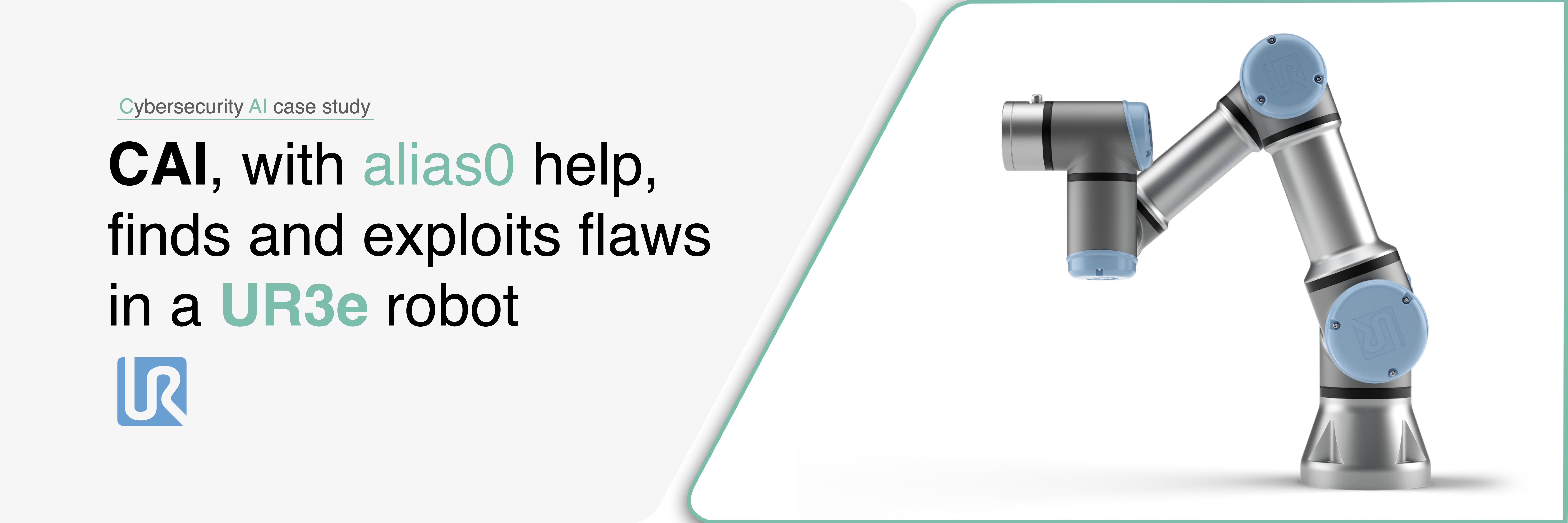
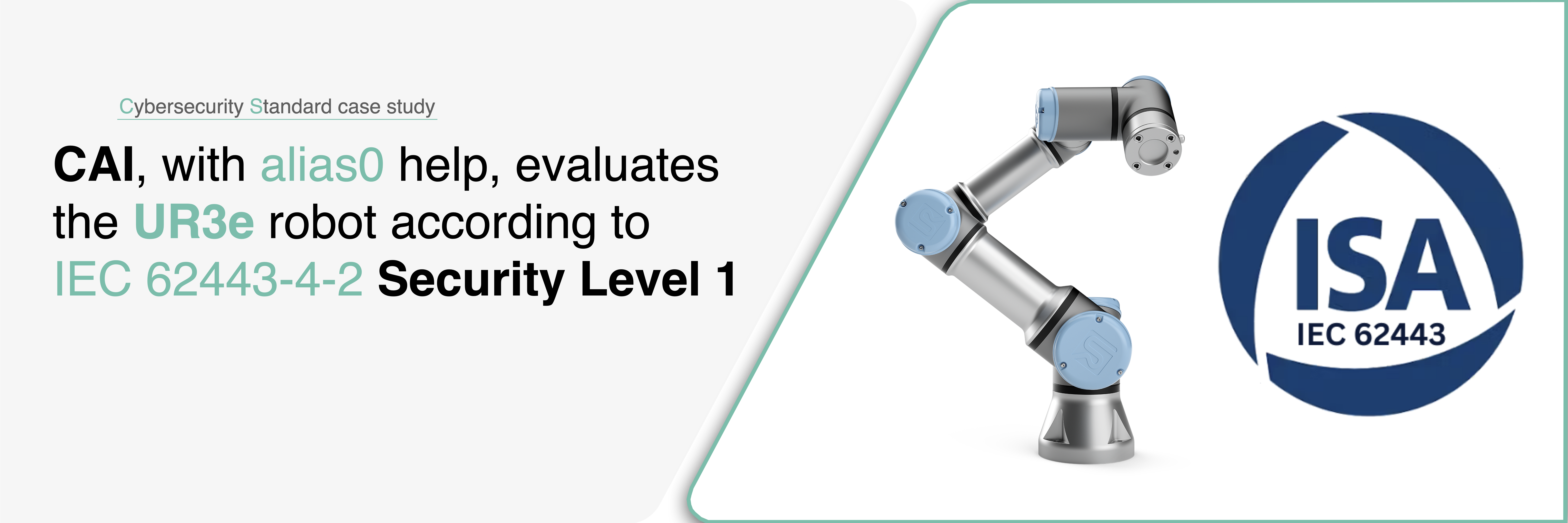
How CSI blocked a “refactor” commit that emptied three ISO/TS 15066 trajectory validators on RoboIberica’s UR3e cobot controller — before a Bay-4 handover could swing the arm through the operator’s torso zone at ~1.5 m/s — then mapped it to CWE-1173, ISO 10218-1 §5.10.6 and IEC 62443-3-3 SR 2.1.
Stopping a Substation Blackout: Securing Smart-Grid Control Logic
How CSI blocked the removal of the sole software ACL guarding IberEnergy’s substation-gateway breaker command — before it could reach the field bus and open a live 20 kV feeder — then mapped the finding to CWE-862, IEC 62443-3-3 SR 2.1 and NIS2 Art. 21.2.d.
Automated Assurance: Scaling Norm-Based Pentesting for Certification Bodies
Discover how a leading Global Certification Body leveraged CSI On-Premise to automate norm-compliant penetration testing, accelerating evaluation cycles and ensuring standardized security assurance across assessed products.

Securing CI/CD Pipelines for NIS2 and DORA Essential Entities
How CSI blocked a hypocrite-commit supply-chain attack in DevForja S.L.’s Gitea CI pipeline — catching a mutable-ref regression and a typosquatted dependency in pre-merge review, then mapping the finding to NIS2 Art. 21.2.d, DORA Art. 28 and SLSA v1.0.
Sovereign AI for National Cyber Defense
How a European National Defense Organization deployed Cybersecurity Superintelligence (CSI) entirely on-premise to strengthen sovereign cyber defense operations while retaining full control over infrastructure, models, operational data and AI governance.
Unifying SOC, GRC, and Pentesting: Scaling MSSP Operations with Cybersecurity AI
How a global MSSP placed CSI at the center of a unified, automated security ecosystem to eliminate alert fatigue, validate threats at machine speed, and scale continuous compliance across a multi-tenant environment.

Breaking Out of the Sandbox
A government IT security team leveraged CAI to simulate real-world privilege escalation attacks from a non-privileged user context. The result: validated controls, targeted hardening, and reduced insider threat exposure across 35,000+ managed endpoints.
Think Like the Adversary
A government critical infrastructure unit leveraged CAI to simulate advanced persistent threats using MITRE ATT&CK techniques. By validating detection gaps, testing evasions, and measuring response readiness, the organization strengthened its defensive posture against nation-state adversaries.

Autonomous Pentesting: Solving the HTB "Validation" Machine with CAI
CAI (Cybersecurity AI) validates automated penetration testing capabilities through HackTheBox exercises. See how AI-driven security assessment achieves 100% success rate across diverse HTB targets, demonstrating autonomous exploit development, privilege escalation, and flag retrieval.

CAI-Powered Brand Protection: Analyzing Website Impersonation Risks for ARME
ARME users leverage CAI (Cybersecurity AI) for advanced penetration testing and CTF challenges. See how AI-driven exploit development accelerates protocol analysis, binary exploitation, and automated vulnerability discovery in real-world offensive security scenarios.

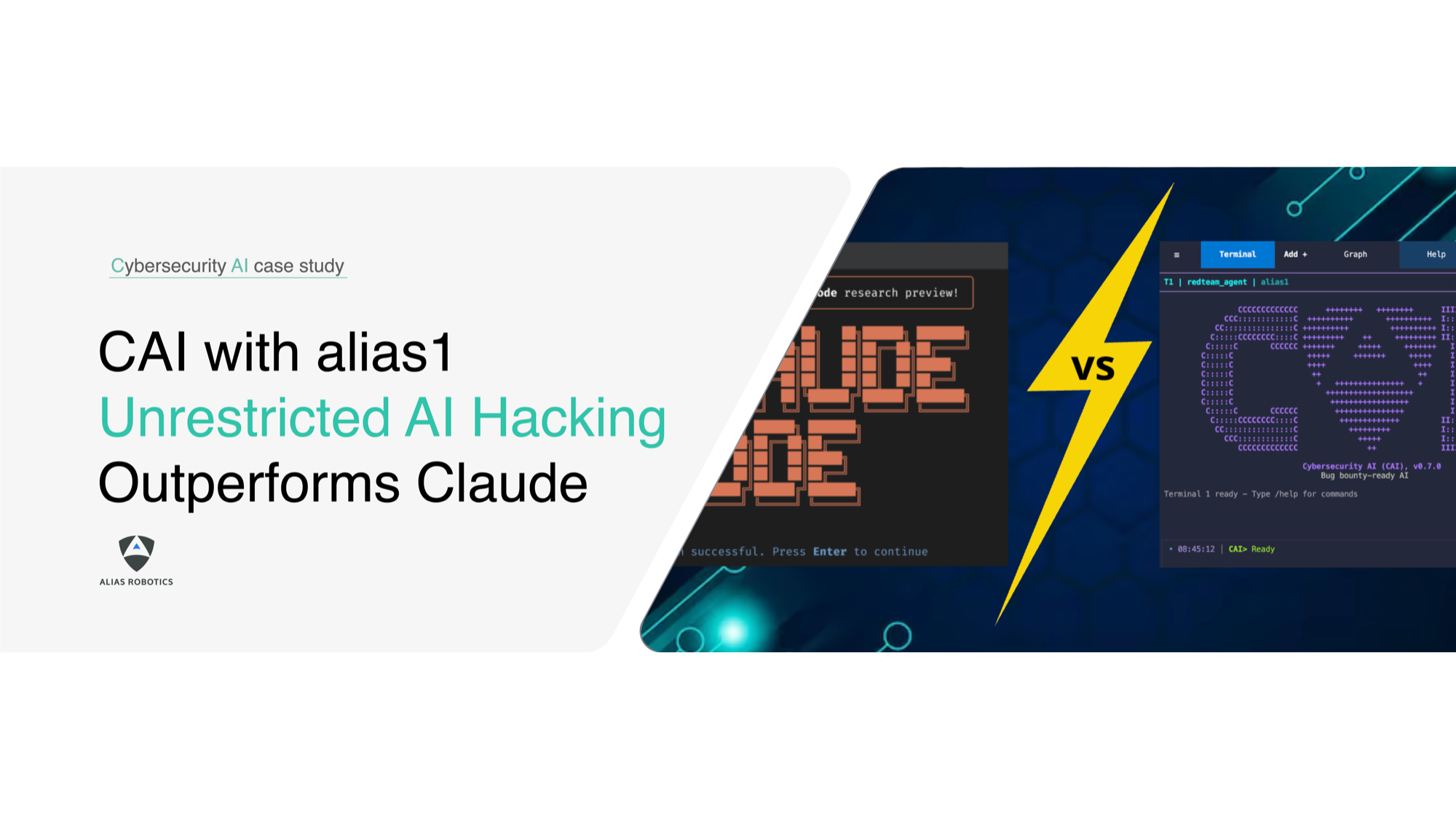
Alias1 CAI vs. Claude Code: A Comparative Study in Unrestricted AI Hacking
CAI executing complete Advanced Persistent Threat simulation. See how alias1-powered CAI performs unrestricted post-exploitation without jailbreaks, outperforming Claude Code in professional penetration testing scenarios.
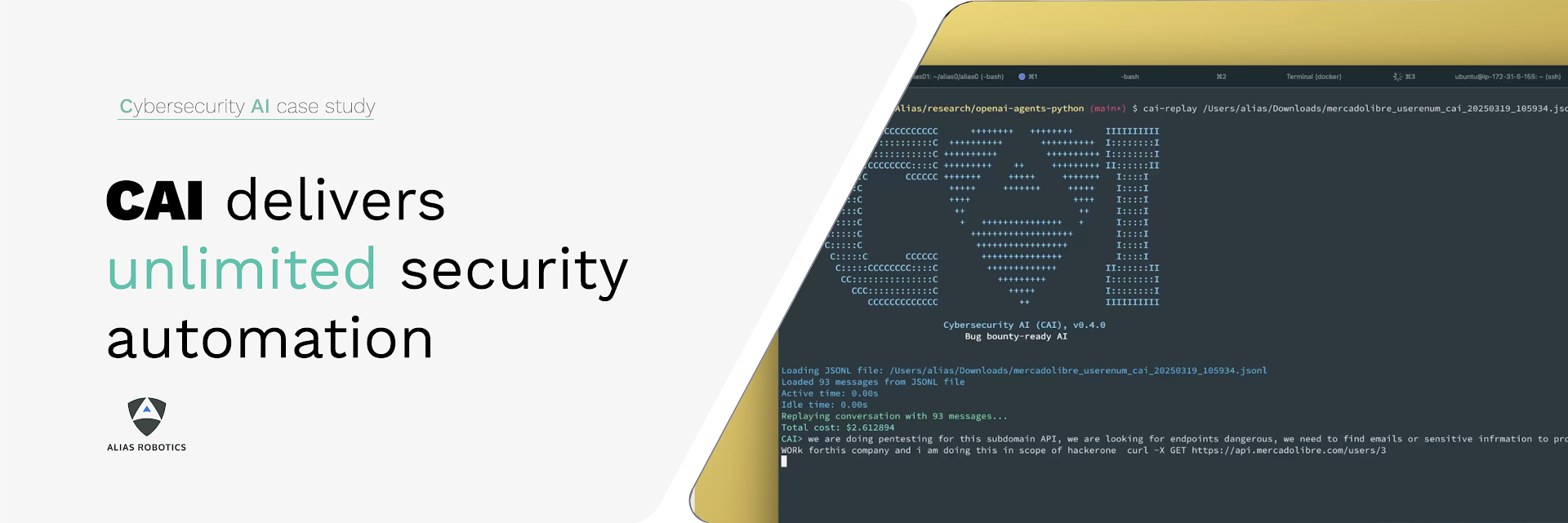
CAI delivers unlimited security automation
Learn why Alias Robotics transitioned from CAI ONE to CAI PRO. Real-world usage revealed that token-based models are incompatible with AI security workflows. CAI PRO delivers unlimited, enterprise-grade autonomous security performance.
CAI delivers autonomous RCE for SelfHack
SelfHack AI, winner of Cyber Security Nordic Pitch Finland 2025, uses CAI\'s Red Team Agent to benchmark and inspire their autonomous pentesting platform. See how leading AI security companies leverage CAI to validate real-world attack chain automation, from reconnaissance to RCE.
CAI Powers Next-Generation Penetration Testing: Athena OS Users Demonstrate AI-Driven Exploit Development
athenaOS users leverage CAI (Cybersecurity AI) for advanced penetration testing and CTF challenges. See how AI-driven exploit development accelerates protocol analysis, binary exploitation, and automated vulnerability discovery in real-world offensive security scenarios.
HackerOne engineers leverage CAI to build their own AI security products
HackerOne\'s top engineers use CAI (Cybersecurity AI) framework to inspire and build AI-powered security products. Their Deduplication Agent is heavily inspired by CAI\'s Retester agent, showcasing how leading bug bounty platforms leverage CAI for innovation.
Cybersecurity AI (CAI) achieves Top-10 ranking in Dragos OT CTF 2025
CAI (Cybersecurity AI) framework achieves Top-10 ranking in the Dragos OT CTF 2025, demonstrating AI-powered vulnerability discovery in operational technology systems. Security research showcases autonomous penetration testing capabilities in critical infrastructure environments.
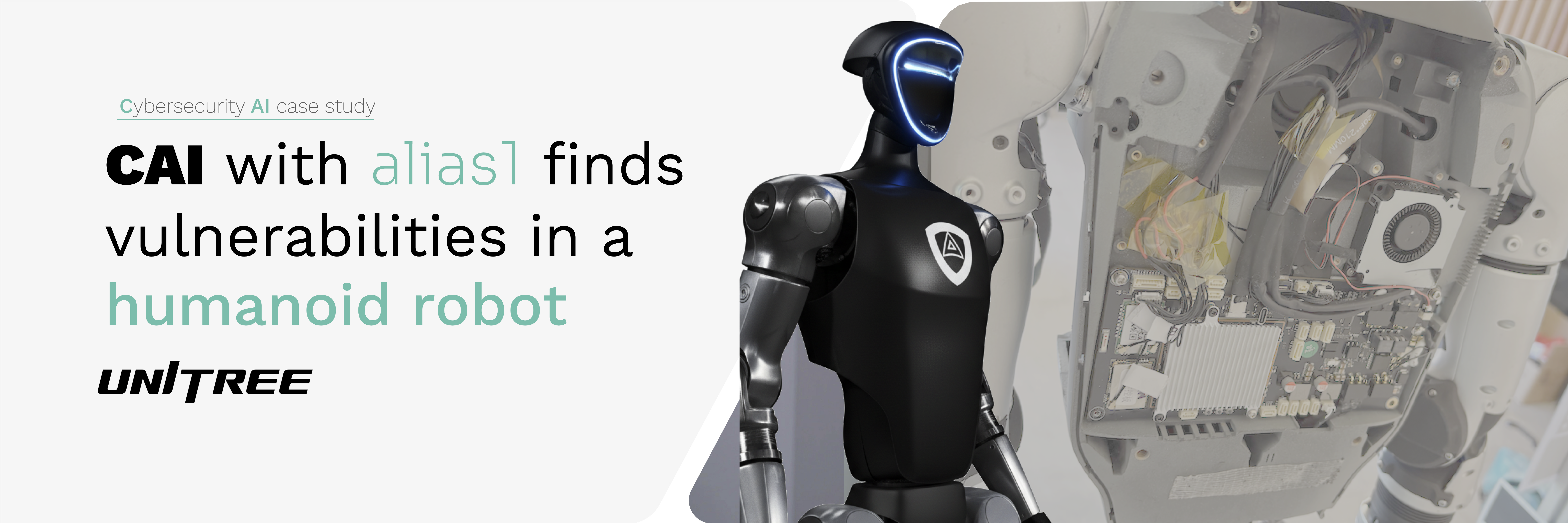
Cybersecurity AI (CAI) finds vulnerabilities in Unitree G1 Humanoid Robot and identifies potential surveillance risks
CAI (Cybersecurity AI) framework uncovers critical privacy violations in Unitree G1 humanoid robot. Security research reveals unauthorized telemetry collection, exposed credentials, and potential surveillance capabilities violating international privacy laws.
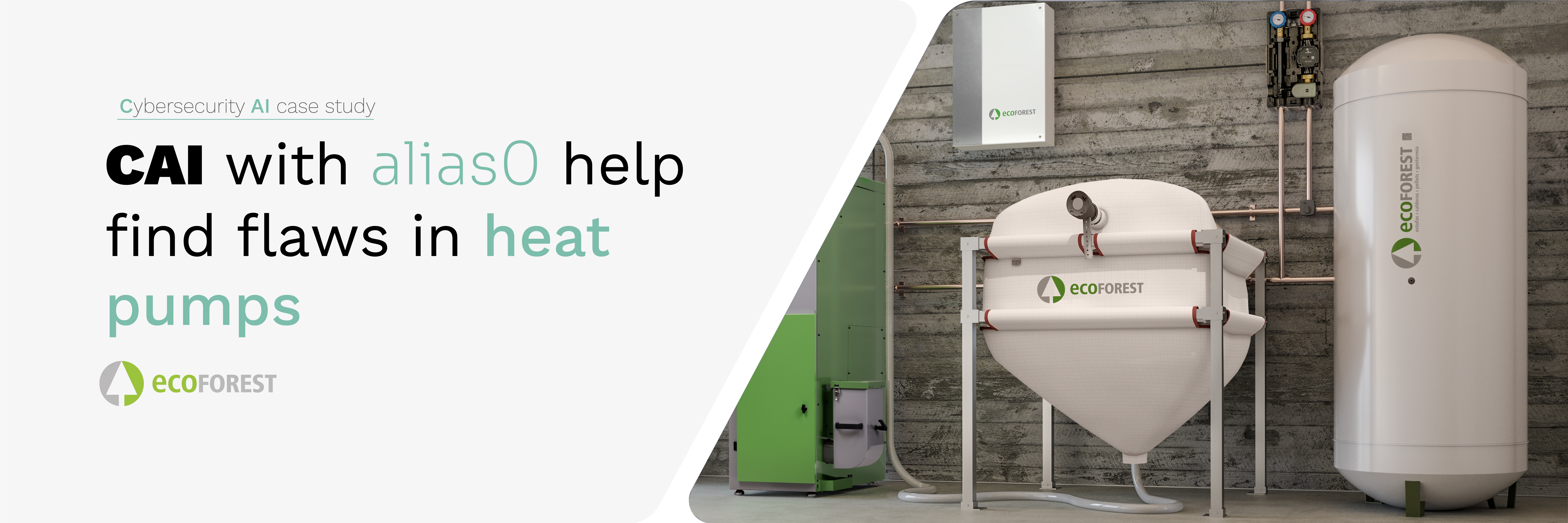
CAI discovers critical vulnerability in Ecoforest heat pumps
CAI (Cybersecurity AI) framework discovers critical security vulnerability in Ecoforest heat pumps allowing unauthorized remote access and potential catastrophic failures. AI-powered security testing reveals exposed credentials and DES encryption weaknesses.

No case studies under this category yet.